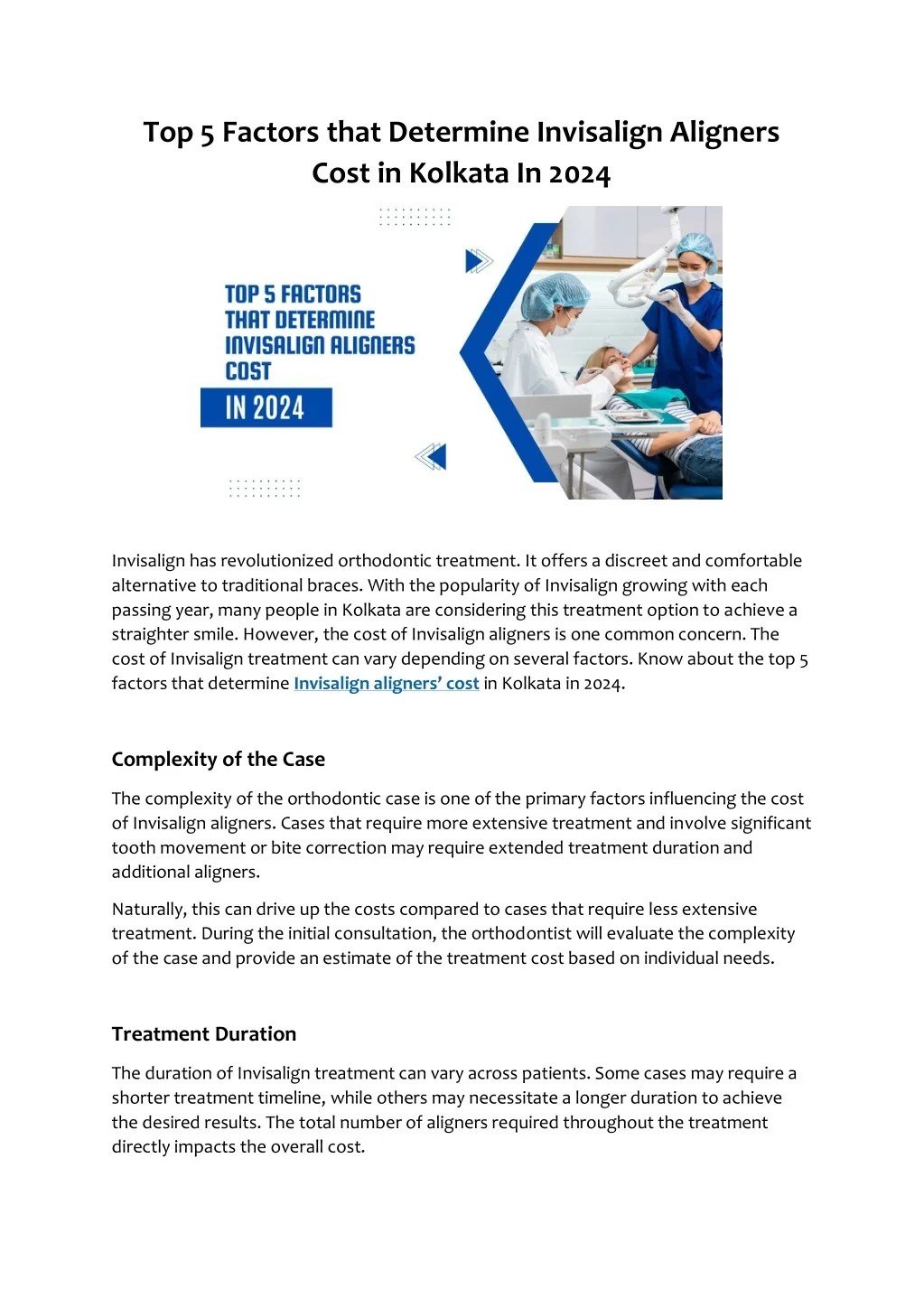
The journey to a straighter smile often begins with a vision of sleek, invisible aligners—Invisalign. But before you can picture that confident grin, a crucial question usually arises: "What's this going to cost me?" Understanding the Invisalign Cost Analysis & Pricing Factors isn't just about getting a number; it's about making an informed investment in your oral health and confidence.
It's easy to get overwhelmed by the price tags you see online, which often vary wildly. That's because the cost of Invisalign isn't a fixed figure you can pull from a menu. Instead, it's a dynamic calculation influenced by a handful of critical variables, tailored uniquely to your smile and circumstances. As a seasoned journalist who's seen countless dental transformations, I can tell you that dissecting these factors is the first step toward clarity.
At a Glance: What You Need to Know About Invisalign Costs
- No Fixed Price: Costs vary widely based on individual needs.
- Key Drivers: Case complexity, treatment duration, provider experience, and geographic location are the biggest factors.
- Beyond the Quote: Budget for potential additional costs like refinements and retainers.
- Smart Savings: Insurance, financing plans, HSA/FSA, and comparing providers can significantly reduce out-of-pocket expenses.
- Consultation is Key: Only a certified orthodontist can provide an accurate, personalized estimate.
- It's an Investment: Beyond aesthetics, Invisalign improves oral health and quality of life.
Unpacking the "Why": What Makes Invisalign a Premium Choice?
Before we dive into the numbers, let's briefly touch on what makes Invisalign such a sought-after solution. Unlike traditional metal braces, Invisalign uses a series of clear, custom-made plastic aligners designed through advanced digital scanning of your teeth. These aligners gradually and predictably shift your teeth into the desired position.
The benefits are compelling: they're virtually invisible, incredibly comfortable, and, perhaps most appealingly, removable. This means you can eat, brush, and floss without the dietary restrictions or cleaning challenges associated with fixed braces. Long-term benefits extend beyond a perfect smile; they include improved oral hygiene, enhanced self-confidence, and better bite function, potentially preventing future dental issues. It’s these advantages that position Invisalign as a modern, convenient, and often preferred alternative for many.
The Core Equation: Key Factors Driving Invisalign Costs
The total cost of your Invisalign treatment is primarily a function of a few core variables. Think of it like buying a car: the base model has one price, but adding features, opting for a luxury brand, or buying it in a high-demand city all change the final sticker price. Invisalign works similarly.
The Complexity of Your Smile: Minor Tweaks vs. Major Transformations
This is arguably the single most significant factor in your Invisalign cost analysis. Your individual orthodontic needs dictate the entire treatment plan, from the number of aligners required to the overall duration.
- Minor Adjustments: If your dental concerns are relatively straightforward—say, a few slightly misaligned front teeth, small gaps, or minor crowding—your treatment will likely be shorter and therefore less expensive. These "limited" or "express" Invisalign cases might require fewer aligners (e.g., 6-12 sets) and could be completed in as little as 6 to 12 months. This is often the scenario for those seeking purely aesthetic corrections or minor bite adjustments.
- Moderate to Complex Cases: On the other end of the spectrum are more significant orthodontic issues, such as severe crowding, considerable gaps, overbites, underbites, crossbites, or open bites. Correcting these challenges demands a more extensive series of aligners, intricate planning, and a longer treatment period, often extending 18 months or even several years. Naturally, more aligners and a longer treatment plan translate directly to a higher overall cost. Each custom-made aligner set represents a portion of the manufacturing and planning expense, and complex cases simply require more of them.
It's vital to understand that the "complexity" isn't just about how bad your teeth look. It’s about the biomechanical forces required to move them safely and effectively into their optimal positions. A comprehensive diagnostic assessment by an orthodontist, which includes digital scans, X-rays, and photos, will precisely determine the complexity of your unique case.
Time is Money: How Treatment Duration Impacts Your Bill
Closely tied to case complexity, the length of your treatment significantly impacts the final bill. The longer you wear Invisalign, the more resources, aligners, and appointments you'll need, which adds to the expense.
- Shorter Treatments: As mentioned, simpler cases requiring only a few months of treatment mean fewer aligner trays are needed. This naturally reduces the manufacturing cost of the aligners and the number of follow-up visits to your orthodontist.
- Extended Treatments: If your teeth require substantial movement, or if your case is particularly challenging, your treatment could span 18 months, two years, or even longer. Over this extended period, you'll go through a greater number of aligner sets (sometimes 40, 50, or more) and have more frequent check-ins with your orthodontist to monitor progress and make any necessary adjustments. Each of these elements contributes to the overall cost. Longer treatment durations also factor in the orthodontist’s time and expertise required for ongoing oversight and management.
It's worth noting that while shorter treatment sounds appealing, rushing the process can lead to suboptimal results or even harm. A qualified orthodontist will always recommend a treatment timeline that ensures effective and healthy tooth movement.
Expertise and Location: The Orthodontist and Their Zip Code
Just like any specialized service, the professional performing your Invisalign treatment plays a crucial role in its cost.
- Provider Experience and Certification: Orthodontists undergo extensive training beyond dental school to specialize in tooth and jaw alignment. Within that specialty, some become highly experienced and certified Invisalign providers, sometimes even achieving "Diamond" or "Platinum" status, indicating a high volume of successful Invisalign cases. Providers with advanced training, significant experience, and a sterling reputation in their field often command higher fees, reflecting their expertise, skill, and the quality of care they provide. While seemingly more expensive upfront, investing in an experienced provider can minimize complications and ensure a more predictable, successful outcome.
- Geographic Location: Where you live and where your orthodontist practices can have a substantial impact on the price. Dental costs, like the cost of living, vary dramatically from one region to another.
- Metropolitan Areas: Expect to pay more in major metropolitan centers like New York City, Los Angeles, or London, where overhead costs (rent, salaries, utilities) are much higher. These costs are often passed on to patients.
- Suburban or Rural Areas: You might find more competitive pricing in smaller towns or suburban areas, where the cost of doing business is generally lower.
- Regional Variations: Even within the same state, prices can fluctuate significantly. It’s not uncommon for treatment in a bustling city to be 10-20% higher than in a neighboring, less dense community.
When you're comparing providers, remember that you're not just paying for plastic trays; you're paying for the skill, diagnostic acumen, and ongoing care from a dental professional. A provider's expertise can be just as important as the bottom line.
Beyond the Initial Quote: Understanding Potential Additional Costs
The initial quote you receive for Invisalign typically covers the diagnostic records, the aligner trays themselves, and the scheduled follow-up appointments. However, a complete Invisalign cost analysis often reveals a few additional expenses that can arise during or after treatment. Being aware of these helps you budget more accurately.
Monitoring Visits: Keeping Tabs on Your Progress
Throughout your Invisalign treatment, you'll have regular check-ups with your orthodontist. These monitoring visits are crucial to ensure your treatment is progressing as planned, that your aligners are fitting correctly, and to address any concerns. While often factored into the initial treatment cost, it's good to confirm this. Some complex cases might require more frequent visits, or even an unscheduled check-up if an aligner breaks or a problem arises. These might incur separate fees depending on your provider’s policy.
Refinement Treatments: The Finishing Touches
Sometimes, even after completing the initial series of aligners, your teeth might not be perfectly aligned or minor adjustments might be needed to achieve the ideal result. This is where "refinement" treatments come in. Refinements involve taking new scans and ordering additional sets of aligners (typically 5-10 more) to fine-tune the final tooth positions.
Many orthodontists include one or two rounds of refinements within the overall treatment cost, especially for comprehensive packages. However, it's essential to clarify this upfront. Some providers might charge extra for subsequent refinement rounds or if the initial treatment plan was for an "express" case. Asking about the provider's refinement policy is a smart move during your initial consultation.
The Lifelong Commitment: Retainers are Non-Negotiable
This is a critical, often overlooked, post-treatment cost. Once your teeth have moved into their desired positions, they have a natural tendency to shift back to their original spots – a phenomenon known as relapse. To prevent this, retainers are absolutely essential.
You will likely need to wear retainers indefinitely, initially full-time (except for eating and brushing) and then transitioning to nighttime wear for the rest of your life. There are generally two types:
- Removable Retainers: Like Vivera retainers (made by Invisalign) or Hawley retainers. These typically cost a few hundred dollars per arch and need to be replaced every few years as they wear out.
- Fixed Retainers: A thin wire bonded to the back of your front teeth. These are more permanent but can sometimes debond or break, requiring repair or replacement.
Your orthodontist will discuss the best type of retainer for you, but expect to budget for these ongoing costs. Neglecting to wear your retainers is one of the quickest ways to undo your entire Invisalign investment. You can learn more about different types of retainers and their care to ensure your new smile lasts a lifetime.
Future Adjustments: Life Happens, So Do Minor Shifts
While retainers are designed to maintain your smile, minor tooth movements can still occur over many years, influenced by factors like natural aging, wisdom teeth, or even gum disease. If these shifts are significant enough to bother you, you might require a minor touch-up treatment (often with a few Invisalign aligners) years down the line. This would be a separate cost, but usually much less extensive than your initial treatment. It’s rare, but something to be aware of.
Smart Strategies: How to Make Invisalign More Affordable
While Invisalign represents a significant investment, numerous strategies can help manage the financial aspect, making that dream smile more accessible. Don't let the sticker shock deter you; exploring these options is key to a positive Invisalign cost analysis.
Leveraging Your Insurance: A Hidden Ally?
Your dental insurance might be a bigger help than you think. Many dental insurance plans offer some level of coverage for orthodontic treatment, and this often includes Invisalign.
- Review Your Policy: Carefully read through your dental insurance policy or contact your provider directly. Look for clauses related to "orthodontic benefits" or "adult orthodontics." Some plans have a lifetime maximum for orthodontic treatment, regardless of age, while others might have age restrictions (e.g., only covering orthodontics for dependents under 18).
- Talk to Your Provider's Office: Most orthodontic practices are adept at working with insurance companies. They can often help you verify your benefits, submit claims, and provide an estimate of your out-of-pocket costs after insurance contributions.
- In-Network vs. Out-of-Network: Check if your chosen orthodontist is "in-network" with your insurance plan. While you can often still receive care from an "out-of-network" provider, your insurance coverage might be less generous, leading to higher personal costs.
Understanding your insurance coverage is the first crucial step in reducing your Invisalign expenses. It's also wise to inquire about a detailed guide to navigating dental insurance for orthodontic procedures.
Flexible Financing and Payment Plans: Spreading the Investment
Even with insurance, you'll likely have an out-of-pocket balance. Fortunately, most orthodontic practices recognize this and offer various financing options to make treatment more manageable.
- In-House Payment Plans: Many practices offer interest-free or low-interest payment plans directly through their office. These plans allow you to spread the total cost over the duration of your treatment, or sometimes even longer, into affordable monthly installments.
- Third-Party Financing: Companies like CareCredit or LendingClub specialize in medical and dental financing. They offer various plans, some with deferred interest for a specific period, allowing you to pay for your Invisalign treatment over 12, 24, or even 60 months. Approval often depends on your credit score.
- Down Payment Options: Be prepared for a potential down payment. This upfront sum reduces your monthly payment amounts and shows your commitment to the treatment.
Discussing financing options during your initial consultation is highly recommended to find a plan that fits your budget. For more insights on managing costs, you might find our article on understanding orthodontic financing options helpful.
Health Savings Accounts (HSA) & Flexible Spending Accounts (FSA): Tax-Advantaged Funds
If you have access to an HSA or FSA through your employer, you have a powerful tool to pay for Invisalign with pre-tax dollars.
- HSA (Health Savings Account): Available with high-deductible health insurance plans. Funds contributed to an HSA are tax-deductible, grow tax-free, and can be withdrawn tax-free for qualified medical expenses, which include orthodontic treatment like Invisalign. HSA funds roll over year to year.
- FSA (Flexible Spending Account): Typically offered through employer-sponsored benefit plans. You contribute pre-tax money from your paycheck into an FSA, which can then be used for qualified medical expenses. The main catch with FSAs is the "use it or lose it" rule, meaning funds generally must be used by the end of the plan year (though some plans offer a grace period or a small rollover amount).
Using HSA or FSA funds can effectively reduce your Invisalign cost by saving you money on taxes, making your dental investment more efficient.
Ask About Discounts and Promotions: Timing is Everything
It never hurts to ask about potential discounts or promotions.
- Seasonal Offers: Some practices run seasonal specials or promotions during certain times of the year.
- Payment in Full Discounts: Occasionally, offices might offer a small discount if you pay for the entire treatment upfront in a lump sum, as it reduces their administrative burden.
- Family Discounts: If multiple family members are undergoing orthodontic treatment at the same practice, you might be eligible for a family discount.
- Referral Programs: Some practices reward existing patients who refer new ones, which could lead to a discount on future treatments or retainers.
While not guaranteed, a simple inquiry can sometimes lead to unexpected savings.
Early Intervention: Catching Problems Before They Grow
For younger patients, addressing orthodontic issues earlier can sometimes simplify treatment and reduce overall costs. Intercepting problems during childhood or adolescence can prevent them from becoming more complex and harder (and more expensive) to correct in adulthood. While this isn't always about Invisalign specifically, it's a general principle in orthodontics that applies to keeping future treatment costs down.
Shop Around (Wisely): Comparing Providers Isn't Just About Price
Getting multiple opinions and quotes is a sensible strategy, but remember that price shouldn't be your only deciding factor.
- Get Several Consultations: Many orthodontists offer free initial consultations. Take advantage of this opportunity to meet different providers, discuss their proposed treatment plans, and compare their pricing.
- Evaluate Value, Not Just Cost: Beyond the number, consider the overall value proposition.
- Experience and Reputation: How long has the orthodontist been practicing? What are their patient reviews like? Are they a highly rated Invisalign provider?
- Treatment Inclusions: What's included in the quote? Does it cover refinements, initial retainers, and all follow-up visits?
- Technology and Comfort: Does the office use advanced scanning technology (like iTero)? Is the staff friendly and the environment comfortable?
- Communication: Do you feel heard and understood? Is the orthodontist clear in their explanations?
Choosing an orthodontist is a personal decision that balances expertise, comfort, and cost. While you want an affordable solution, compromising on quality of care can lead to longer treatment times, less desirable results, or even additional costs down the line. It's crucial to find a provider you trust and feel comfortable with. Our guide on how to choose the right orthodontist for your needs offers more detailed advice.
Invisalign vs. Traditional Braces: The Cost-Benefit Calculus
When considering orthodontic treatment, the comparison between Invisalign and traditional metal braces is almost inevitable, especially regarding cost.
- Traditional Braces: Generally, traditional metal braces tend to be less expensive upfront than Invisalign. Prices can range widely, often falling between $3,000 and $7,000, depending on complexity and location. Ceramic or lingual braces (placed behind the teeth) can narrow that price gap considerably, sometimes even exceeding Invisalign costs.
- Invisalign: As we've detailed, Invisalign costs typically range from $3,000 to $8,000, with averages often landing in the $4,000 to $6,000 range. For very complex cases, it can go higher.
So, why might someone choose Invisalign despite a potentially higher price tag? The answer lies in its unique advantages: - Aesthetics: The most obvious benefit is their nearly invisible nature. For adults and image-conscious teens, this is a significant factor.
- Comfort: Without wires and brackets, Invisalign aligners tend to cause less irritation to the cheeks and gums.
- Convenience: Being removable simplifies eating and oral hygiene. You can enjoy all your favorite foods without restriction and maintain excellent brushing and flossing habits.
- Predictability: Advanced 3D imaging allows both you and your orthodontist to visualize the entire treatment plan from start to finish, including the expected final results.
However, Invisalign isn't suitable for all orthodontic issues. Some extremely complex malocclusions (severe bite problems) or cases requiring specific types of tooth movements might still necessitate traditional braces, which can exert different types of forces. It's important not to self-diagnose. Only a thorough consultation with a dental professional can determine the most effective solution for your specific needs, whether that's Invisalign, traditional braces, or another orthodontic approach. Your orthodontist will present all viable options, allowing you to make an informed decision based on effectiveness, aesthetics, and budget.
The Real Value Proposition: Why Invisalign is an Investment, Not Just an Expense
Looking at the numbers alone, Invisalign can seem like a substantial expense. However, a deeper Invisalign cost analysis reveals that it’s far more than just paying for a cosmetic procedure; it's a profound investment in your overall health, confidence, and quality of life. Many of the benefits of Invisalign extend far beyond mere aesthetics.
- Enhanced Oral Hygiene: Straight teeth are easier to clean. When teeth are crowded or misaligned, brushing and flossing can be incredibly challenging, leading to plaque buildup, increased risk of cavities, gum disease (periodontal problems), and bad breath. Invisalign makes it easier to maintain excellent oral hygiene, potentially reducing future dental work and associated costs.
- Improved Bite Function: Correctly aligned teeth distribute chewing forces evenly, which can prevent abnormal wear on individual teeth, jaw pain (TMJ issues), and even headaches. A proper bite improves digestion and prevents unnecessary strain on your dental structures.
- Prevention of Future Dental Problems: Beyond wear and tear, severe misalignment can lead to speech impediments, make eating uncomfortable, and increase the likelihood of accidental trauma to protruding teeth. By addressing these issues early, Invisalign can prevent more severe, painful, and expensive problems down the road.
- Boosted Self-Confidence: Perhaps the most frequently cited non-physical benefit of Invisalign is the dramatic boost in self-esteem. A beautiful, straight smile can transform how you feel about yourself, how you interact with others, and how you present yourself in both personal and professional settings. This psychological uplift is immeasurable and lasts a lifetime.
- Long-Term Health: Investing in your oral health today is investing in your systemic health tomorrow. The connection between oral health and overall well-being (including heart health, diabetes management, and pregnancy outcomes) is well-documented. A healthy mouth is a cornerstone of a healthy body.
When you weigh these tangible and intangible benefits against the initial cost, the long-term value of Invisalign becomes undeniably clear. It's an investment that pays dividends for years to come, not just in how your smile looks, but in how your body functions and how you experience life.
Your Next Step: The Critical Consultation
Navigating the world of Invisalign costs doesn't have to be a guessing game. The single most important action you can take is to schedule a comprehensive consultation with a certified orthodontist.
During this initial visit, the orthodontist will perform a thorough examination of your teeth, bite, and jaw. This typically involves:
- Digital Scans: Using advanced technology like an iTero scanner to create a precise 3D model of your teeth.
- X-rays and Photos: To assess the underlying bone structure, root positions, and overall oral health.
- Discussion of Your Goals: Understanding what you hope to achieve with orthodontic treatment.
Based on this detailed assessment, the orthodontist will then: - Determine if Invisalign is Right for You: They'll confirm whether your case is suitable for Invisalign or if other options might be more effective.
- Outline a Personalized Treatment Plan: This plan will detail the estimated number of aligners, the projected treatment duration, and the anticipated results.
- Provide a Detailed Cost Estimate: This estimate will break down the total investment, discuss what's included, and outline any potential additional costs.
- Review Payment Options: They will discuss insurance verification, in-house payment plans, and third-party financing solutions.
This consultation is your opportunity to ask every question you have—about the process, the timeline, the expected outcomes, and, of course, the total financial investment. Don't hesitate to inquire about refinements, retainers, and any guarantees.
Choosing Invisalign is a personal and significant decision. By understanding the key factors influencing its cost, exploring financing options, and partnering with an experienced orthodontist, you can embark on your smile transformation journey with confidence and clarity, knowing you've made a smart investment in your health and happiness.